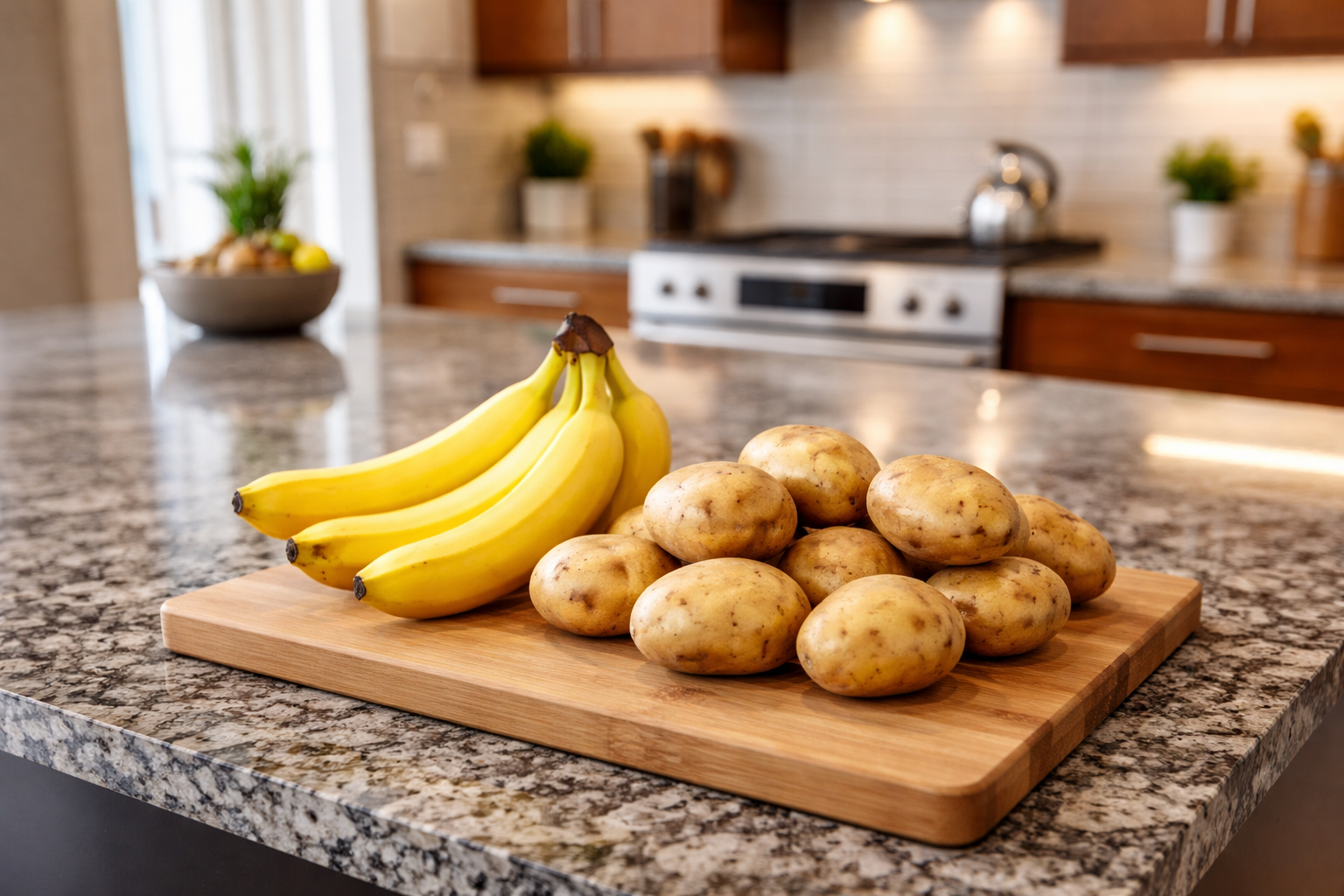
If you’ve been told you have kidney disease, or even just risk factors, you may have heard something like:
“Stay away from bananas and potatoes.”
But is that always true?
For many patients in Fort Worth and across Tarrant County, this is one of the most confusing parts of managing kidney health. The question of whether bananas and potatoes are truly harmful for kidney disease comes up in almost every nutrition conversation we have with CKD patients.
The reality is more nuanced—and understanding it can help you make better, more confident choices.
Why Do People Worry About Bananas and Potatoes?
Bananas and potatoes are often discussed in kidney disease because they contain potassium, an important mineral that helps your muscles and heart function properly.
When kidney function declines, your body may have trouble balancing potassium levels.
That’s where the concern comes in.
Quick Answer: Are Bananas and Potatoes Bad for Kidney Disease?
Not necessarily. Bananas and potatoes are high in potassium, which may need to be limited for some people with chronic kidney disease. However, not all patients need to avoid them completely. The right approach depends on your lab results, stage of CKD, and overall health.
Understanding Potassium: Why Bananas and Potatoes Consern Kidney Disease Patients
Potassium is essential—but balance matters.
Healthy kidneys:
- Keep potassium levels within a safe range
When kidney function declines:
- Potassium can build up in the blood
- High levels may affect heart rhythm
The National Kidney Foundation explains that potassium management becomes important as kidney function declines, particularly in later stages of CKD. That’s why some patients are advised to monitor intake.
So… Can You Still Eat Bananas?
For many patients, the answer is: sometimes, yes—with guidance.
It depends on:
- Your current potassium levels
- Your stage of kidney disease
- Your overall diet
Some patients may:
- Eat smaller portions
- Eat bananas less frequently
- Avoid them temporarily if levels are elevated
If your potassium levels require closer management, lower-potassium fruit options like apples, berries, and grapes can be good alternatives.
What About Potatoes?
Potatoes are one of the most common foods patients ask about when managing kidney disease, and for good reason. They’re high in potassium, but how they’re prepared matters.
Some preparation methods (like soaking or double cooking) may reduce potassium content.
That said, dietary adjustments should always be based on your individual care plan—not general rules.
The Bigger Picture: It’s Not About One Food
One of the biggest misconceptions is that managing kidney disease is about avoiding specific foods.
In reality, it’s about:
- Overall dietary patterns
- Portion sizes
- Lab monitoring
- Personalized guidance
That’s why blanket advice like “never eat bananas” can be misleading.
Simple, Practical Tips
If you’re unsure where to start:
✔ Don’t eliminate foods without understanding why
✔ Pay attention to your lab results
✔ Ask questions about potassium levels
✔ Focus on balance, not restriction
How This Fits Into Your Kidney Care
At Fort Worth Renal Group, we take a whole-person approach to kidney care.
That means:
- Explaining your lab results clearly
- Helping you understand what foods mean for you
- Building a plan that fits your life—not just a list of restrictions
Because the goal isn’t just avoiding problems—it’s helping you move forward with confidence.
What This Means for You
If you’ve been told to avoid certain foods—or you’re not sure what’s safe:
- Start by understanding your lab values
- Don’t rely on generic food lists
- Ask for personalized guidance
- Take small, informed steps
You don’t have to guess—and you don’t have to do this alone. If you’re in Fort Worth, Tarrant County, or the greater DFW area and want personalized guidance on managing potassium and kidney health, our kidney specialists are here to help.
Frequently Asked Questions
Are bananas always bad for kidney disease?
No. It depends on your potassium levels and stage of CKD.
Are potatoes high in potassium?
Yes, but preparation methods and portion size matter.
What foods should I avoid with CKD?
This varies by patient. There is no universal list.
Can I lower potassium through cooking?
In some cases, certain cooking methods may reduce potassium levels.
Should I follow a strict kidney diet?
The best approach is a personalized one based on your labs and provider guidance.
Medical & Educational Disclaimer
This article is provided for educational and informational purposes only and is not intended as medical advice, diagnosis, or treatment. Health information is general in nature and may not apply to your specific situation.
Always consult your physician, nephrologist, or other qualified healthcare provider regarding any questions you have about a medical condition or before making changes to your healthcare, medications, or lifestyle. Never delay or disregard professional medical advice because of information contained in this article.