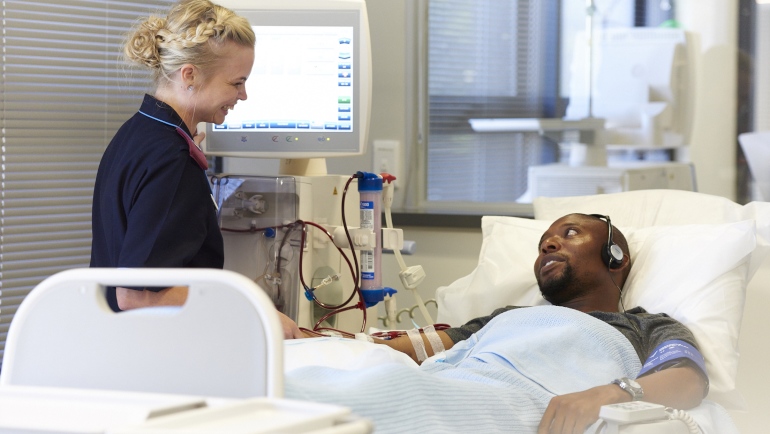
If your nephrologist has recommended you start kidney transplant evaluation — or you are supporting a loved one through the process — you are likely facing a mix of relief, anxiety, and questions about what comes next.
You are not alone. According to the Organ Procurement and Transplantation Network, more than 108,886 Americans are currently on the U.S. transplant waiting list — and approximately 85% are waiting for a kidney specifically. Each of those patients went through the same evaluation process you are about to begin.
For patients and caregivers in Fort Worth and across the DFW area, transplant evaluation can feel like an overwhelming series of appointments, tests, and unfamiliar terminology. This checklist is designed to help both patients and the people supporting them feel prepared, informed, and in control of the process ahead.
Medically reviewed by Dr. Patrick Nef, MD |Transplant Nephrologist, Fort Worth Renal Group
Before Your Evaluation: What to Prepare
Patients who move through evaluation efficiently arrive prepared. Use this checklist in the weeks leading up to your first transplant center appointment.
Medical history and records
☐ Summary of your kidney disease history, including diagnosis date and key lab trends
☐ Records from any hospitalizations or surgeries in the past 5 years
☐ Names and contact information for all specialists currently involved in your care
☐ Recent imaging studies on disc or in digital format
Medications and supplements
☐ Current list of all prescription medications with doses and frequency
☐ Over-the-counter medications and supplements, including vitamins and herbal remedies
☐ Any medications you have stopped in the past year and why
Insurance and financial information
☐ Insurance cards and confirmation of transplant benefits coverage
☐ Questions ready about co-pays, anti-rejection medication coverage, and travel costs
☐ Documentation of any disability or leave-of-absence support you may need
Support system
☐ Name and contact information for your primary caregiver
☐ A backup caregiver in case your primary is unavailable
☐ Family or friends who can help with transportation, meals, or follow-up care
During Evaluation: What to Expect
A typical kidney transplant evaluation spans several weeks to a few months. According to the National Institute of Diabetes and Digestive and Kidney Diseases (NIDDK), evaluation typically includes blood and urine testing, heart function testing such as an echocardiogram or stress test, imaging studies, and a review of other medical conditions.
You will also meet with:
- A transplant surgeon, who assesses surgical candidacy
- A transplant nephrologist, who manages medical care before and after surgery
- A social worker, who assesses your support system and identifies potential barriers
- A financial coordinator, who walks through insurance and out-of-pocket costs
- A pharmacist or nurse coordinator, who explains anti-rejection medications
Evaluation is not a single decision point. It is a series of conversations and assessments that build into one question: is transplant the right next step for this patient’s life?
For Caregivers: Your Role Matters
Transplant evaluation is not only an assessment of the patient — it is also an assessment of the support system around them. Caregivers play a documented role in patient outcomes.
What evaluators want to see from caregivers
- Availability for surgery day and the recovery period, typically 2–6 weeks
- A clear plan for transportation to follow-up appointments
- Willingness to learn medication management, including anti-rejection drugs
- A communication plan with the transplant team
Practical preparation for caregivers
- Identify backup caregivers early — before they are needed
- Review your work leave policies (FMLA, short-term disability, employer accommodations)
- Track your own questions separately — they are valid and worth raising
- Take care of yourself; caregiver burnout is real and can affect patient outcomes
Common Delays and How to Avoid Them
Patients sometimes experience delays during evaluation that are not medical in nature. The most common:
- Incomplete medical records. Gather records from every specialist in advance.
- Dental clearance issues. Most transplant centers require a dental evaluation — schedule yours early.
- Cardiac testing concerns. Have any cardiac issues evaluated thoroughly before referral.
- Unaddressed substance use. Centers assess substance use history and may require evaluation or documentation of treatment. Policies vary by program.
- Insurance authorization gaps. Confirm transplant coverage before your first appointment.
How Fort Worth Renal Group Supports You Through Evaluation
Transplant evaluation can feel like a process that happens to you. We believe it should happen with you — with your nephrology team actively coordinating each step alongside the transplant center.
At Fort Worth Renal Group, we’ll tell you exactly what’s happening, what it means, and what we’re going to do about it. In practice:
- Whole-picture evaluation. We treat transplant readiness as more than meeting medical criteria — we consider your lifestyle, support system, and goals together.
- Backed by data. We draw on a broad base of clinical outcomes data to inform every step of your preparation — so your plan reflects what is actually working for patients with similar profiles.
- Care beyond the kidney. Nutrition counseling, lifestyle coaching, and coordination with your other specialists are part of the standard plan.
- Built in Fort Worth, for Fort Worth. We coordinate directly with DFW-area transplant centers so you and your caregiver are not navigating the system alone.
Frequently Asked Questions
How long does kidney transplant evaluation take?
For well-prepared patients it can take 2–4 months from referral to listing decision, though the timeline varies. Patients who arrive with complete records and a clear support plan often move through faster.
What if I am not approved at evaluation?
Some patients are not approved at the first evaluation, but this is rarely permanent. Common reasons — unresolved medical issues, incomplete records, weight or fitness concerns — can often be addressed with continued nephrology care, allowing re-evaluation later.
Do I need to be on dialysis to be evaluated?
No. Many patients are evaluated and listed before starting dialysis. This is called preemptive listing, and it is often associated with better outcomes. Talk with your nephrologist about timing.
What if my caregiver cannot commit to the full recovery period?
This is a common concern. Evaluation teams want to see a plan, not necessarily one person. Identifying multiple supporters — family, friends, paid caregivers — can satisfy this requirement.
Where can I be evaluated for a kidney transplant in DFW?
Multiple transplant programs serve the DFW area. Your Fort Worth Renal Group nephrologist can recommend the program that best fits your situation and coordinate the referral.
You’re Not Just a Number
Transplant evaluation can feel like a sequence of tests, lab values, and gatekeeping decisions. It is, in part. But it is also something more important — the beginning of the next chapter for you, or for someone you love.
A spot on a waiting list is one piece of a much larger picture: your health, your family, your goals, your life beyond kidney disease. At Fort Worth Renal Group, we see all of it
We don’t just treat kidney disease. We change what happens next.
Built in Fort Worth, for Fort Worth. Schedule at dfwrenal.com.
Medical & Educational Disclaimer
This article is provided for educational and informational purposes only and is not intended as medical advice, diagnosis, or treatment. Health information is general in nature and may not apply to your specific situation.
Always consult your physician, nephrologist, or other qualified healthcare provider regarding any questions you have about a medical condition or before making changes to your healthcare, medications, or lifestyle. Never delay or disregard professional medical advice because of information contained in this article.